In today's era of rapidly developing technology in the Fourth Industrial Revolution, especially Artificial Intelligence (AI), businesses that are slow to innovate and fail to keep up with development face a very high chance of falling behind and being eliminated.
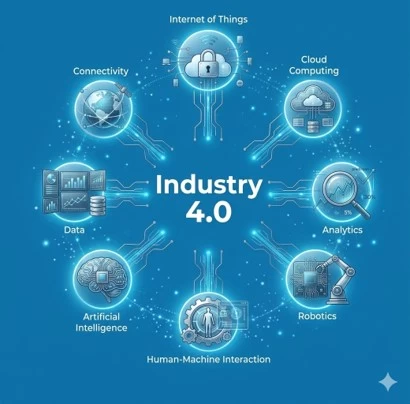
For organizations and businesses wanting to adopt AI, the core requirement is to collect data—information that is quickly and accurately gathered and accumulated to become a "gold mine" for analysis, helping management make data-driven decisions, not based on intuition! To have complete data, businesses must implement Enterprise Resource Planning (ERP) software; this is a prerequisite for AI to fully utilize its powerful and fast computing capabilities ( ERP integrated with AI ).
However, failed ERP system implementations are a major problem for many Vietnamese companies, especially manufacturing businesses such as wood, furniture, packaging, textiles, seafood processing, and mechanical engineering. Many manufacturing companies have failed not just once, but two or three times in their ERP implementations. The losses are so significant that they no longer dare to consider investing in ERP systems, losing faith in digital transformation and missing out on opportunities for growth in the Fourth Industrial Revolution!
With over two decades of experience in consulting on management software and digital transformation solutions for many large Vietnamese businesses in general, and Enterprise Resource Planning (ERP) systems in particular, we have compiled valuable lessons from cases of unsuccessful ERP implementations (especially in manufacturing companies) to help businesses avoid similar mistakes. These failures are painful because the investment can amount to millions of US dollars, representing not only financial loss but also significant loss of effort, time, and resources. Crucially, many business owners lose faith in ERP vendors.
We have tentatively categorized unsuccessful ERP implementation projects for businesses into the following three types:
- Complete failure : The business loses money (licensing fees & consulting fees according to the project implementation phase) without being able to use any software modules, and also cannot recover the money from the ERP consulting and implementation company.
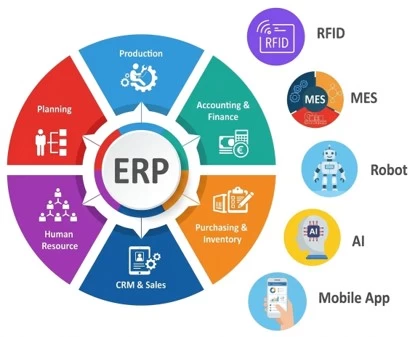
- Partial application : Businesses can only use basic software modules such as CRM & Sales – Purchasing – Inventory – HR - Accounting & Finance – Tax. Software modules serving production such as Planning (MRP, MDS, MPS…) & Production Management; Costing cannot run because the software does not meet the actual needs of production management.
- Nearly complete implementation : The business has fully implemented all software modules (as per the signed contract). However, usage still feels forced, and users are dissatisfied, for example, processes are not truly aligned with reality; the software lacks features; reports are missing or inadequate… The ERP implementation unit refuses to customize, quotes excessively high customization costs, or is unable to customize according to customer needs!
This article is based on years of practical experience witnessing and knowing about unsuccessful ERP implementation projects, especially in manufacturing businesses in Vietnam. To help our customers avoid these mistakes and prevent financial losses, we would like to summarize the common errors that businesses often encounter (causes from the vendor, consulting firm, implementation, etc. will be listed in another article) as follows:
1. Do business owners think that having the money to buy a well-known ERP system automatically guarantees successful implementation ?!
This is commonly seen in well-established, long-standing Vietnamese corporations and companies with substantial budgets for IT and management software. Business owners and management teams tend to have a simplistic mindset, viewing ERP systems (such as ERP for manufacturing , packaging, plastic packaging , paper packaging , cardboard packaging , wood and furniture , textiles , machinery , and processing ) like investments in factories and equipment. They believe that once purchased, a team of experts from the manufacturer will provide training, guidance, and handover. These businesses often target internationally renowned ERP software because they see their foreign partners using it very effectively. The business owner thought that large global corporations (in the same manufacturing industry) had successfully implemented ERP systems for many years, so buying this ERP system and deploying it for their company according to those "Best Practices" would be perfect – fast and hassle-free!

However, reality is not as rosy as it seems! Around the beginning of 2000, I knew of a famous Vietnamese private beverage company that signed a contract with a UK-based ERP consulting and implementation company specializing in the beer and carbonated beverage industry (this ERP had been successfully implemented for many famous global brands). However, the project was ultimately abandoned midway because the system could not be customized to the company's highly specific requirements. Furthermore, the two consultants from the UK who flew over to implement the ERP charged an hourly rate (US$300/hour) and a daily rate (US$2,400/day). The consulting costs far exceeded the initial plan (due to the unique requirements), so the company owner decided to stop the project!
Around 2010, I witnessed a very well-known industrial plastics company in Saigon invest a huge amount of money at the time in a world-leading ERP solution (over US$1.5 million for ERP & Data Center licenses, not including the costs of setting up and paying salaries to the internal ERP team, which consisted of CIOs and IT professionals with ERP experience), but completely fail after two implementation attempts with one domestic ERP partner and a second implementation partner from Singapore.
To give you an example, at the beginning of 2025, we signed a contract to implement ExpertERP for a large Vietnamese plastic packaging company specializing in the production of fertilizer bags, rice bags, and agricultural products. They were using a foreign ERP software from our parent company, but it only worked for a few departments like Sales, Purchasing, and Inventory. Meanwhile, the most crucial areas – production planning and management (QA/QC; statistics) – were inaccessible, and cost calculations were impossible. Furthermore, they had to pay a significant amount for software maintenance each year!

ERP is not just software ( ERP software for manufacturing management ; ERP for production management ; ERP for packaging ; ERP for plastic packaging ; ERP for paper packaging ; ERP for cardboard packaging ; ERP for wood and furniture ; ERP for textiles ; ERP for mechanical engineering ; ERP for processing , etc.). An ERP system is the actual operational process of a company, affecting all business activities and changing the thinking, habits, and working methods of employees, middle and senior management, and business owners. In short, having money can help a business successfully invest in advanced, modern machinery, equipment, and technology on par with the world, but having money doesn't guarantee successful investment in and implementation of an ERP management system!
2. With a limited investment budget, which ERP implementation provider offers the best value?
In contrast to the lesson above, this mistake is commonly made by businesses that want to implement ERP but set a budget too low, or decide to choose an ERP vendor based solely on the CHEAPEST or LOWEST project cost, without paying attention to other important factors such as:
- Has that vendor successfully implemented an ERP system (with all modules including planning, production, and costing) for a manufacturing company in the same industry and of similar size to ours?
- The ERP system must be verified in practice by visiting the site, directly interacting with users of the software, and meeting the case study's BOD.
- Does the vendor's consulting and implementation team have "real-world" experience in this industry? Can they provide critical feedback and advise on the best management solutions for the business? Or do they simply implement software based on end-user descriptions and requirements (with a narrow and short-term vision)?
- Can that ERP company be a long-term partner for my business? Or will it run out of investment resources and collapse midway?
We've observed that the majority of ERP projects ( manufacturing ERP software ; production management ERP ; packaging ERP ; plastic packaging ERP ; paper packaging ERP; carton packaging ERP ; wood and furniture ERP; textile ERP ; mechanical engineering ERP ; processing ERP , etc.) that choose this criterion end up failing, either being abandoned midway or only implementing basic modules. Almost all of GMC's current successful customers using ExpertERP software have previously failed when implementing ERP based on choosing a vendor offering the cheapest or lowest price!
Occasionally, we encounter businesses whose owners come from a manufacturing background. Confident in their experience, they choose to outsource software development to a company or a team of programmers to create custom software (the initial investment cost is cheaper than using a ready-made ERP system). The business provides processes, descriptions of the current situation, needs, reports, etc., for the programmers to develop the software accordingly. Typically, these software systems initially run modules like Sales Management, Purchasing, Inventory, Delivery, QA/QC, and Production Statistics, but they often struggle with the most difficult part: Production Planning (MRP, MPS, MDS). This often makes further development impossible, let alone building new systems integrated into the existing ERP platform, such as Mobile Apps or MES. Usually, after 3 to 5 years, the software in these businesses falls into a dilemma: discarding it would be a waste of investment, but further development is not feasible!

Furthermore, a major problem in Vietnam today is that many software consulting and implementation companies falsely claim and heavily advertise themselves as ERP consulting and implementation units in general, and manufacturing ERP in particular. For example, many companies specializing only in CRM software; sales, purchasing, inventory, accounting, and tax reporting management… also loudly advertise themselves as ERP consulting and implementation units. Or there's one foreign ERP company that's been heavily promoted recently as a "Smart manufacturing management solution for all businesses"… while in reality, the software doesn't meet the standards of a specialized ERP for manufacturing management and production planning! These companies often quote low prices for manufacturing ERP implementation, sometimes as low as a few hundred million VND. The ultimate result is that businesses lose money, effort, time, trust, and opportunities for growth.
3. The company's leadership is unwilling to change, lacks decisiveness, and does not dedicate sufficient effort and time to the ERP project.
As mentioned in Part 1, ERP is not a software tool ( ERP for manufacturing management ; ERP for production management; ERP for packaging ; ERP for plastic packaging ; ERP for paper packaging ; ERP for cardboard packaging ; ERP for wood and furniture ; ERP for textiles ; ERP for mechanical engineering ; ERP for processing , etc.), it is the actual operating process of a business. When a company decides to implement ERP , it must accept changes to the operating processes of each department and the coordination of the entire company. It's impossible to think in terms of: "The ERP system must be adjusted to exactly the way the company has been operating all along!" Or, "I've always managed things using Excel, accounting software, inventory management, etc., so the ERP must be the same because I find it good and I'm used to it!"
Many business owners and leaders, accustomed to non-standard management methods, continue to operate in the old way, refusing to adapt to new processes. Some company directors are used to signing documents directly, even with ERP systems in place. How can they expect employees to change if they still sign as before? If the goal is to force the entire company to adopt the new management system, the Board of Directors must be decisive, setting an example and leading the way to pull the entire "train" along!

Many business owners and management teams sign contracts with vendors and then leave the ERP project implementation entirely to their partners and internal staff. Successful ERP implementation requires a Project Manager (PM) with in-depth knowledge of the company's current situation, understanding its challenges and weaknesses, and the goals it needs to achieve. The PM and core team on the client side must be thorough, decisive, dedicated, and truly committed to the project. Since ERP project implementation, especially for manufacturing ERP, takes at least 5-6 months, or even 1-2 years, the PM and core team, particularly the management teams of both sides, must be persistent, patient, and work together wholeheartedly to achieve success!
4. Departments and divisions that are reluctant to change and unwilling to adopt ERP for various reasons.
There is a key leadership group, holding crucial and important positions (often long-time employees who have shared the hardships since the business owner's inception), who are reluctant to adopt an ERP system for overall business management for many reasons. Here are a few common reasons:
- Firstly: The employee is older, prefers to follow established habits, and is proud of their management experience… They are unwilling to change and do not accept new management methods.
- Secondly: That position is very important to the company; without them, it would significantly impact the entire production and business operations of the unit. However, all the knowledge and experience are in that person's "head," and they don't share or train others.
- Thirdly: This person holds all the company's operational data and is responsible for compiling and preparing management reports for the Board of Directors.

Generally, these people don't want to lose the feeling of being "important" in the company, they don't want to lose the "power" or even the "benefits" they currently have! During our many years of experience participating in ERP projects ( ERP software for manufacturing management ; ERP for production management; ERP for packaging ; ERP for plastic packaging ; ERP for paper packaging ; ERP for cardboard packaging; ERP for wood and furniture; ERP for textiles ; ERP for mechanical engineering ; ERP for processing , etc.), we would like to share a few specific cases as follows:
- Over 15 years ago, after working with the Deputy General Director in charge of the ERP project at a well-known state-owned electrical cable manufacturing company, our consulting team was introduced to the Accounting Department. The Chief Accountant simply said, "I don't want to use ERP; I think MISA is working well for me!" The Chief Accountant of that company was appointed by the Ministry of Industry and Trade, and the Board of Directors had no authority to replace him. That ERP project failed from the outset!
- Around 2009, we signed a contract to implement Microsoft Dynamics AX for a well-known seafood processing company in Binh Thuan, which had previously used Vietnamese accounting software. The Chief Accountant held all the operational data and was the only one who prepared reports for the company's Board of Directors. The General Director assigned the Chief Accountant to be the Project Manager (PM) on the client side to work with us. On the surface, the Chief Accountant was very cooperative, but inwardly he deliberately prolonged the time it took to provide data, trying to introduce other suppliers…
- A few years ago, we implemented an ERP system for a large Vietnamese furniture manufacturing company with nearly 2,000 workers. The company purchased round timber (acacia, eucalyptus, etc.) to saw, dry, and supply planks to the company's production workshops. The person in charge of the wood drying workshop was a relative and had worked with the owner since the company's inception, so he was very reputable and trusted. When implementing the ERP, he did not participate, and the workshop staff also refused to enter data into the software, continuing to use Excel files for reporting. In early 2025, the company discovered a significant discrepancy between the reported data and the actual inventory, but it was already too late!

The above are some practical examples and lessons for businesses in Vietnam that need to implement an ERP management system. So, how do you choose a reputable ERP consulting and implementation company (especially for manufacturing ERP) to ensure a high success rate for your ERP project? You can refer to our article via the following link: https://experterp.vn/en/implementation-consulting-14-12.html
If your company needs to find a reputable consulting and implementation partner for ERP software in manufacturing management ; ERP for packaging ; ERP for plastic packaging ; ERP for paper packaging ; ERP for cardboard packaging ; ERP for wood and furniture ; ERP for textiles ; ERP for mechanical engineering ; ERP for processing … with a team of experienced experts who have successfully implemented solutions for many manufacturing companies such as: Unilever; PTSC M&C; StarPrint; S&K; MM; UniLab; Glopaco; Aplas; Dai Thanh Furniture; Le Tran Furniture; TKMB Group; Khang Viet & Dy Khang; Wilmar CLV; Steel Builder… please do not hesitate to contact us using the information below:
GMC Software Solutions Joint Stock Company
Address: 23 C2 Street, Tay Thanh Ward , Ho Chi Minh City
Tel: 028 6660 3006
Mobile: 0918 050 964
Email: Nghia.tran@experterp.vn
Website: https ://experterp.vn & https ://gmc.solutions
 Other Posts